


Bloodletter
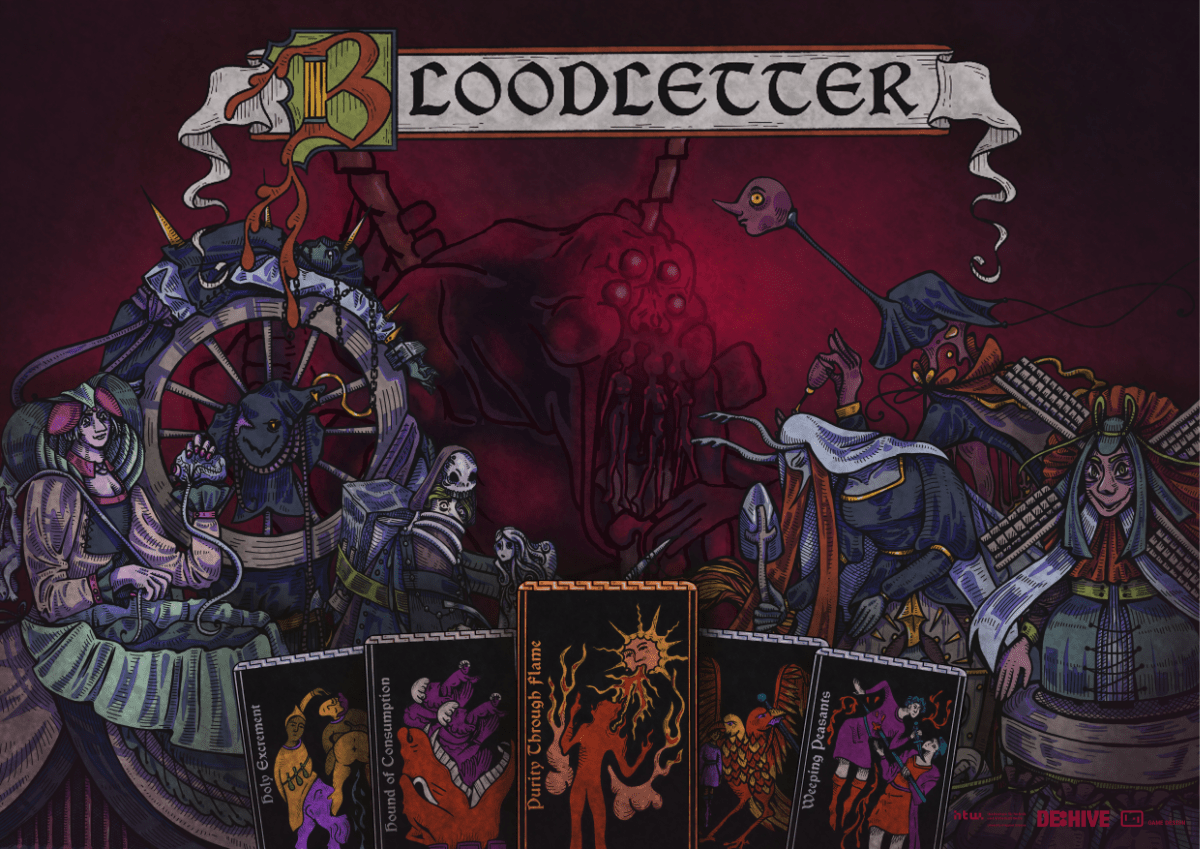
Medicine used to be anything but an exact science. Bloodletter takes us right into the heart of this terrifying uncertainty: with just a handful of arcane playing cards, we have to treat a daily stream of bizarre villagers. The men and women before us have not only physical problems, but mental ones too. Depending on our luck with the cards, we help them to a greater or lesser extent, until at the end of each day an undefined “entity” awakens and weakens the helpless people once again.
The fact that Bloodletter keeps us hooked is also due to the unique illustration style, which is somewhere between tarot cards and medieval manuscripts. This world is threatening, unappetizing, and yet fascinating – not least thanks to the musical soundscape. After each day we survive, we can receive new cards and change our existing hand. However, we can only overcome the threat if the purity of the village has been permanently restored. Thus, the game swings back and forth uneasily.
At times, we still lacked tactical options, but that is a question of balance that seems solvable. The result already feels wonderfully dark, alchemical, and dangerous.
The DCP Jury 2024